
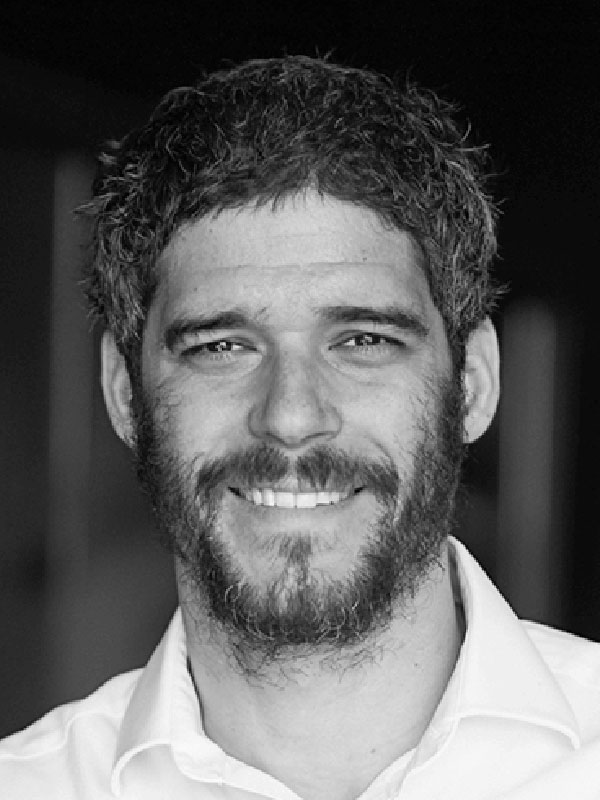
David Koranyi is a foreign and energy policy specialist with experience in Budapest, Brussels, Washington, D.C., and New York. He currently serves as Senior Advisor on City Diplomacy to the Mayor of Budapest, Hungary, as a policy advisor on sustainable energy at the United Nations Department of Economic and Social Affairs, as a non-resident senior fellow for energy diplomacy at the Atlantic Council, and as strategic advisor at GLOBSEC.
Year: 2021
-

David Blankenhorn
David Blankenhorn is president of Braver Angels, a citizens’ organization working for less rancor and more goodwill in politics and society. Before co-founding Braver Angels, David led the Institute for American Values, a think on civil society he founded in 1988. He also founded the Mississippi Community Service Corps and the Virginia Community Service Corps and co-founded the National Fatherhood Initiative. The author of four books, David grew up in Jackson, Mississippi; graduated from Harvard College in 1977; received an M.A. in history from the University of Warwick in Coventry, England, in 1979; and lives today in New York City.
-
Daniel Kelemen
R. Daniel Kelemen is Professor of Political Science and Law and Chair of the Department of Political Science at Rutgers University. An internationally renowned expert on European Union politics and law, he is author or editor of six books including Eurolegalism: The Transformation of Law and Regulation in the European Union (Harvard University Press), which won the Best Book Award from the European Union Studies Association, and author of over one hundred articles and book chapters. Kelemen is a member of the Council on Foreign Relations and a regular commentator on EU affairs in US and European media. Prior to Rutgers, Kelemen was Fellow in Politics, Lincoln College, University of Oxford. He has been a Member of the Institute for Advanced Study at Princeton, visiting fellow in the Program in Law and Public Affairs (LAPA) at Princeton University, and a Fulbright Fellow at the Centre for European Policy Studies in Brussels.
-
Dániel Hegedűs
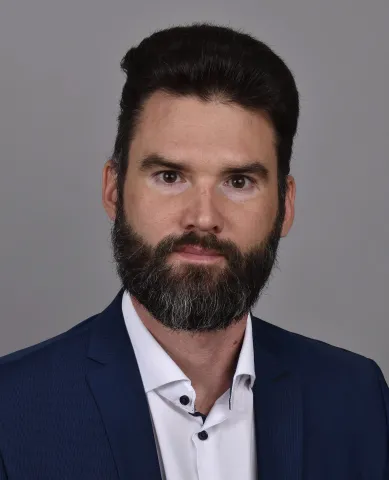
Dániel Hegedüs is Deputy Director of the Institut für Europäische Politik. Previously, he was Regional Director for Central Europe at the German Marshall Fund of the United States (GMFUS). His research focuses on democratic and rule of law backsliding in the European Union, populism, and the European and foreign affairs of the Visegrad countries. He has studied political science, history, and European law at the Eötvös Loránd University Budapest and the Humboldt University in Berlin. Before joining GMFUS in 2019, he has worked in different research, lecturing, and program management positions at the German Council on Foreign Relations (DGAP), the German Institute for International and Security Affairs (SWP), Freedom House, the Institute for Eastern-European Studies at the Free University Berlin, Humboldt University to Berlin, and the Eötvös Loránd University Budapest. He is author of more than 50 academic and policy papers, and a frequent contributor to international media.
-
Dániel Bartha
Mr Bartha is a foreign and security policy expert. He received his degree in International Studies from the Corvinus University of Budapest and is currently a PhD student at the University of Pécs’s doctoral program in geography. He is the president of the Foundation for Euro-Atlantic Integration and Democracy and also served as its director from 2014-2019. Previously, he was the first director of the Central European Policy Institute (the GLOBSEC Policy Institute today) in Bratislava. Between 2005 and 2012, he was employed at the International Centre for Democratic Transition (ICDT), where he worked as a project manager, was then appointed director for development, and finally went on to serve as the Strategic Vice President at the Centre for Democracy Public Foundation, the ICDT’s oversight body.
-
Cristina Corduneanu-Huci
Cristina Corduneanu-Huci holds a PhD in Political Science from Duke University. She was a Max Weber Postdoctoral Fellow at European University Institute. Cristina has written on autocratic politics, clientelism, bureaucratic reform, government transparency and international development. Her work has appeared in World Politics, Democratization, Business and Politics, Journal of Comparative Economics, Comparative Sociology, the World Bank Policy Research Working Papers series, and several edited volumes. She co-authored two books entitled Understanding Policy Change: How to Apply Political Economy Concepts in Practice and Rules on Paper, Rules in Practice: Enforcing Laws and Policies in the Middle East and North Africa, exploring the complex relationship between collective action, rule of law, and economic development. She has conducted political economy research and training for the World Bank in Washington, DC. In this capacity, she was involved in studies of the distributive implications of natural resources in the Democratic Republic of Congo, healthcare policies in Uruguay, as well as in projects on the rule of law and public financial management in the Middle East and North Africa region. Her research has been accompanied by various training programs prepared or delivered in Ethiopia, Singapore, Sudan, and Ghana.
-
Claudia Gamon
Claudia Gamon is an Austrian Member of the European Parliament. She is the NEOS (The New Austria and Liberal Forum) spokesperson for all things European and sits with the Renew Europe group in the EP. The 32-year-old campaigns for a decisive European Union that should ultimately result in the United States of Europe. In her work, she focuses mainly on the topics digitalisation, energy, research and technological progress.
She is a member of the Industry Committee (ITRE) and a substitute member of both the Environment Committee (ENVI) and Internal Market Committee (IMCO). Claudia Gamon is also the Vice-Chair of the Delegation for relations with the EEA/EFTA-states (DEEA) and a substitute member of the North Macedonia Delegation (D-MK).
Claudia Gamon studied International Business Administration and International Management at the Vienna University of Economics and the Université catholique de Louvain. She gained her first political experience in 2011 as the leader of the Young Liberals in the Austrian Students’ Union. From 2015, she had represented NEOS as a Member of the Austrian Parliament before she was elected to the European Parliament in 2019.
She brings European politics to your screen as @diegamon on Twitter, Instagram and Facebook.
-

Charles Sabel
Charles Sabel is a professor of Law and Social Science at Columbia Law School. Previously he was Ford International Professor of Social Science at MIT. Recent work develops pragmatist ideas into a general conception of democratic experimentalism, with particular attention to regulation, the provision of complex social services and contracting under uncertainty.
-
Charles Gati
Charles Gati is a political scientist who fled his native Hungary after the collapse of the 1956 revolt, and is now Senior Research Professor of European and Eurasian Studies at Johns Hopkins University’s School of Advanced International Studies in Washington, DC. His previous positions have included teaching Central and Eastern European as well as Russian politics and foreign policy at Union College and Columbia University. He served as a Senior Adviser on the Department of State’s Policy Planning Staff in the early 1990’s. Among his publications are The Bloc That Failed (1990), Hungary and the Soviet Bloc (1986), Failed Illusions (2006), ZBIG (2013), and other works.