Year: 2023

  • Zsuzsanna Szelényi

    Zsuzsanna Szelényi

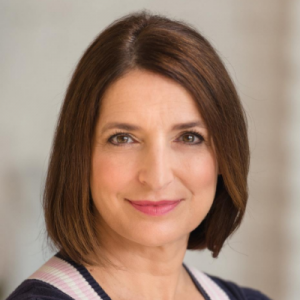
    Zsuzsanna Szelényi is Program Director of the CEU Democracy Institute Leadership Academy, and Senior Fellow at CEPA.

    Before joining the CEU Democracy Institute, Zsuzsanna Szelényi was Richard von Weizsäcker fellow at the Robert Bosch Academy in Berlin conducting research on polarization, populism, and autocratization as threats to democracy in the context of the future of the European Union.

    Between 2014-2018 Ms Szelényi has been a liberal Member of Parliament in Hungary, covering foreign policy, migration, and constitutional affairs.

    Before rejoining politics in 2012 in Hungary, Ms Szelényi served at the Council of Europe advising governments and NGOs on conflict management, human rights education, and human development issues. Between 2010-2013 she worked as a human development consultant for international organizations in various Central European and North African countries.

    Ms. Szelenyi started her career as a member of Fidesz, a youth party at the regime change in Hungary in 1988. As a Member of Parliament, she was dealing with international and migration affairs. She left politics in 1994 for a professional career. In 2012 she returned to Hungarian politics.
  • Zsuzsa Anna Ferenczy

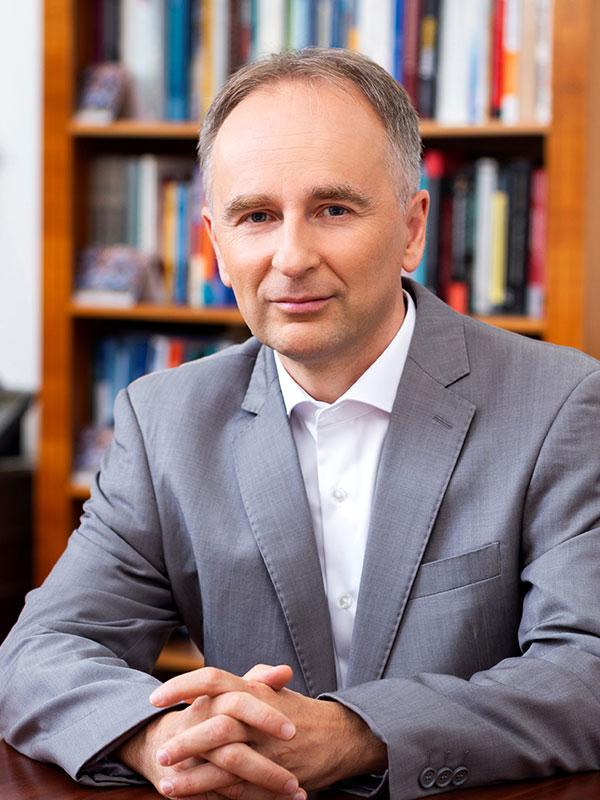
    Zsuzsa Anna Ferenczy is an Associate Researcher at Vrije Universiteit Brussel and an Assistant Professor at the National Dong Hwa University.

    Dr. Zsuzsa Anna Ferenczy is Affiliated Scholar at the Department of Political Science of the Vrije Universiteit Brussel (Free University of Brussels), Associated Research Fellow at the Institute for Security & Development Policy in Sweden, Head of the Associates Network at 9DASHLINE, Research Fellow at Taiwan NextGen Foundation and Consultant on China, Taiwan and the Korean Peninsula at Human Rights Without Frontiers. Currently Zsuzsa is Assistant Professor at the National Dong Hwa University in Hualien, Taiwan. Between 2008 and 2020 Zsuzsa worked as a political advisor in the European Parliament.

  • Zsolt Enyedi

    Zsolt Enyedi

    Zsolt Enyedi is a Senior Research Fellow at the CEU Democracy Institute, and Professor at CEU.

    Zsolt Enyedi studied comparative social sciences, history, sociology and political science in Budapest and Amsterdam. The focus of his research interests is on party politics, comparative government, church and state relations, and political psychology (especially authoritarianism, prejudices and political tolerance). His articles appeared in journals such as Political Psychology, European Journal of Political Research, Political Studies, West European Politics, Party Politics, Political Studies, Europe-Asia Studies, Problems of Post-Communism, Journal of Ideologies or European Review. Zsolt Enyedi was the 2003 recipient of the Rudolf Wildenmann Prize and the 2004 winner of the Bibó Award. He was a fellow at the Woodrow Wilson Center (Washington D.C.), Kellogg Institute (Notre Dame University), the Netherlands Institute for Advanced Studies (Wassenaar), the European University Institute (Florence), the Center for Transatlantic Relations, Johns Hopkins University, DPIR and Pembroke College, University of Oxford. His most recent book, Party System Closure, co-authored with Fernando Casal Bertoa, was published by Oxford University Press in 2021.

  • Žiga Faktor

    Žiga Faktor is the Deputy Director and Head of Brussels Office at EUROPEUM Institute for European Policy.

    Žiga Faktor works as the head of the Brussels office of the EUROPEUM. From his position, he focuses on the functioning of the European institutions, the process of European integration and enlargement policy, regional cooperation of the countries of Central Europe, relations with the countries of the Western Balkans and Turkey, and Slovenia’s internal policy. Other points of interest are the conflicts in the former Yugoslavia and Northern Ireland.

    Žiga Faktor received a Master’s degree in International Politics from the State University of Milan in Italy and a Bachelor’s degree in International Relations and European Studies from the Metropolitan University of Prague. He spent a semester studying at the University of Limerick in Ireland. He started working at EUROPEUM in 2018 as an intern and later on worked as a project manager. In the past, he also participated in the organization of the Prague European Summit from the position of the programme manager.

  • Péter Krekó

    Péter Krekó

    Political scientist, social psychologist, disinformation expert. He is a senior fellow at the Washington-based CEPA think tank and a PopBack Fellow at the University of Cambridge. Earlier, he was a guest researcher at the Europe’s Futures – Ideas for Action program of the Vienna-based Institute for Human Sciences (IWM), and a non-resident Associate Fellow at the Johns Hopkins University SAIS Bologna Institute of Policy Research. Peter is an associate professor with habilitation at the Department of Social Psychology at ELTE PPK. During 2016-2017, Péter worked as a Fulbright Visiting Professor in the United States at the Central Eurasian Studies Department of Indiana University. He wrote his PhD dissertation on the social psychology of conspiracy theories in 2014, and he habilitated in 2020. He has been the executive director of Political Capital since 2011.

    His main areas of expertise are disinformation, Russian political influence in the West, and European populism and radicalism. He was the co-chair of the EU Radicalization Prevention Network PREVENT until 2015. He is the owner of Political Capital. He has written two books: Tömegparanoia, which has been published in two editions, introduces the social psychological foundations of fake news and conspiracy theories in a scientific and informative manner, and The Hungarian Far Right – which he wrote together with Attila Juhász – on the politics of the Hungarian far right after the democratic transition. The latter is published by Ibiden Verlag and distributed by the Columbia University Press.

  • Katalin Cseh

    Katalin Cseh is a Member of the European Parliament of Renew Europe.

    She was elected as a Momentum Movement (part of the Renew Europe party group) Member of the European Parliament (MEP) in the 2019 parliamentary election.

    Momentum Movement became a centrist political party in March 2017. In August 2017, she was appointed to the governing board of the party. Cseh was a candidate for the party in the 2018 Hungarian parliamentary election. The party did not win any seats in parliament, and the governing board (including Cseh) resigned.

    Katalin Cseh was born on 29 June 1988 in Montreal, Quebec, Canada. Her early education was at Toldy Ferenc High School in Budapest, Hungary. She graduated from Semmelweis University specialising in obstetrics and gynaecology. In 2015, she obtained a master’s degree in Health Economics, Policy, and Law from Erasmus University Rotterdam. In the same year, Cseh co-founded Momentum Movement group with nine others. The group campaigned against the Hungarian government’s decision to bid for the 2024 Summer Olympics. They petitioned for a referendum on the issue and garnered more than 266,000 signatures. This resulted in the government withdrawing their bid.

    Momentum Movement became a centrist political party in March 2017. In August 2017, she was appointed to the governing board of the party. Cseh was a candidate for the party in the 2018 Hungarian parliamentary election. The party did not win any seats in parliament, and the governing board (including Cseh) resigned.

    Cseh stood as a candidate for Momentum Movement in the 2019 European parliamentary election. She was first on her party’s list, and was elected as one of its two MEPs (the other being Anna Júlia Donáth) in Hungary. In the European Parliament, she is one of the eight vice-chairs of the Renew Europe political group. Cseh is a member of the Committee on Industry, Research, and Energy and is part of the delegation for relations with the United States.

  • Ostap Sereda

    Ostap Sereda is a Visiting Professor at Central European University and Director of the Invisible University for Ukraine.

    At the CEU I teach courses on cultural politics and contested identities in Eastern European borderlands in the long 19th century. As a rule, they deal with the key issues of the modern history of Eastern Europe (nation-building, intelligentsia and peasants, culture and identity, border and frontier, assimilation and acculturation), and explore the mechanisms of the cultural construction of modern social, national and regional identities in the regions that once belonged to the Polish-Lithuanian Commonwealth and the Crimean Khanate, then were incorporated by Habsburg and Romanov monarchies, and nowadays constitute Belarus, Lithuania, and Ukraine. The main aim is to gain a better understanding of a borderland as contested, polycentric, and culturally diverse space shaped both by administrative policy of the imperial center(s) and local cultural traditions.

    I have been exploring political and cultural aspects of the identity-building process in imperial borderlands also through my two research projects. The first one deals with the political discourses and cultural practices of several competing Ruthenian national projects in 19th-century Austrian Eastern Galicia. So far, it resulted in several articles in journals like “Jahrbücher für Geschichte Osteuropas”, “Canadian American Slavic Studies”, “Journal of Ukrainian Studies”, “Ukraina moderna”.

    My second project focuses on the cultural politics in one of the most contested and rapidly growing provincial centers of the late Russian empire, the city of Kyiv (Kiev, Kijów), in particular on the theatrical life, which became an arena for negotiations between the imperial political interests, the national representational strategies of various urban publics, the artistic aspirations of leading cultural figures, and the popular demand for entertainment. My aim is not only to locate musical theater in the context of political and social history of the region, but also to understand better the character of cultural interaction in an emerging Eastern European metropolis.

  • Niklas Nienaß (online)

    Niklas Nienaß is Member of the European Parliament for The Greens/EFA.

    He grew up in Aachen, only a few kilometres away from the Belgium and Dutch border. Since 2013 he lives in Rostock, Mecklenburg-Western Pomerania – the northeastern seaside state that shares an island with Poland. In 2020 he finished his master studies in Good Governance with a thesis on internaRonal space law. The focus of his poliRcal work lies on strengthening European cohesion through regional development and cultural policy. Further prioriRes are the topics youth and space. Niklas is commiSed to thinking climate protecRon and social jusRce together, to provide beSer legal protecRon and social security for arRsts and creaRves and to develop the European Union into a federal state. In addiRon to his work in the CommiSees for Regional Development (REGI), Culture and EducaRon (CULT) and ConsRtuRonal Affairs (AFCO), he has iniRated several extra-parliamentary projects. He is co-founder of the Cultural Creators Friendship Group, the RUMRA & Smart Village Intergroup and the Youth Interest Group. Last but not least, he is also a member of the European Parliament delegaRons for Central Asia and Mongolia and Afghanistan.

  • Nika Kovač

    Nika Kovač is the Founding Director of 8th of March Research Institute.

    8th of March Research Institute is a movement-building organization that uses storytelling and advocacy to confront gender and economic inequalities across Slovenia. Commemorating International Women’s Day, which is celebrated annually on March 8th, the 8th of March Research Institute works to break the silence around sexual violence by gathering testimonials and data on issues of rape, abortion, and sexual assault across the country. Under her leadership, the 8th of March Research Institute’s advocacy campaigns successfully initiated the legal redefinition of rape in Slovenia, enforcing a new legal precedent for the “yes means yes” consent model.

    Nika has a master’s degree in social and cultural anthropology from the University of Ljubljana and was a member of the 2020 class of the Obama Foundation Leaders program in Europe and Obama Foundation Scholars Program at Columbia University in 2021/22. She is also the author of three books, My Choice: Testimonies, Rights and Prejudices.

  • Nick Thorpe

    Nick Thorpe is Central Europe Correspondent at BBC.

    Nick Thorpe is a British journalist and documentary filmmaker who is the Central Europe Correspondent for BBC News, the main newsgathering department of the BBC, and its 24-hour television news channels BBC World News and BBC News Channel, as well as the BBC’s domestic television and radio channels and the BBC World Service. He is based in Budapest and has over 30 years’ experience of reporting for the BBC and United Kingdom newspapers, becoming BBC Budapest Correspondent in 1986. He became BBC Central Europe Correspondent in 1996.