Year: 2025

  • Rafał Trzaskowski

    Rafał Trzaskowski

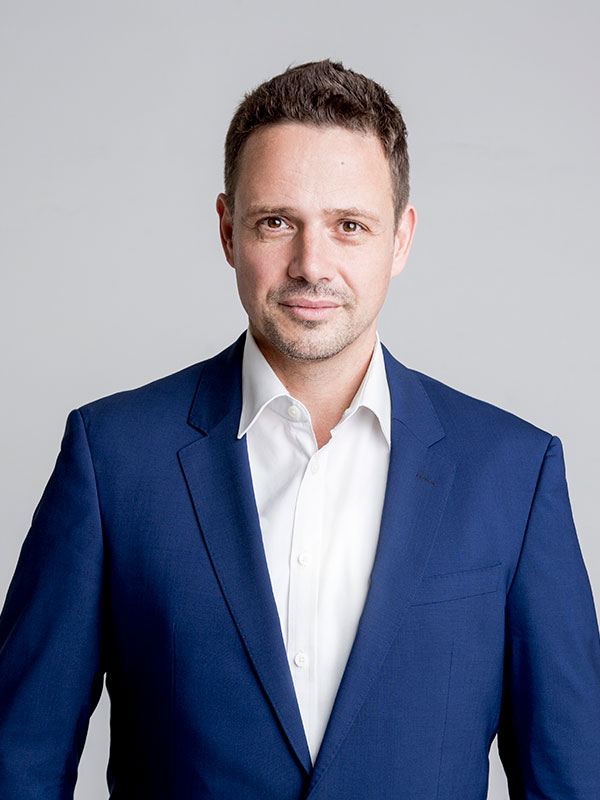
    Rafał Trzaskowski is the Mayor of Warsaw since 2018. He is a member of the European Committee of Regions and the Board of Eurocities. In 2020 and 2025, Rafał Trzaskowski was the Civic Platform’s candidate for the Presidency of Poland.

    He is a Former MP, MEP, and Vice-Chair of the European People’s Party. In 2014, served as the Deputy Minister of Foreign Affairs of the Republic of Poland and in 2013 as a Minister for Administration and Digitalization in the Cabinet of PM Donald Tusk.

    Rafał Trzaskowski was born in Warsaw, where he studied and graduated in international relations and English philology at the University of Warsaw. In 2004 he obtained his PhD degree in political science. He speaks fluent English, French, Spanish, Russian and Italian.

  • Raluca Radu

    Raluca Radu

    Raluca Radu is a professor of journalism and communication studies at the University of Bucharest, Romania, and the former Director of the Department of Journalism (2015-2023). She is a PhD coordinator within the Doctoral School in Communication Studies and the Interdisciplinary School of Doctoral Studies, at the University of Bucharest.

    Her research interests include media ethics, media economics and audience studies (with a focus on digital audiences and on teenagers), and radicalization on social media. She is the author of the Romanian page, in the Reuters Institute Digital News Report, and a researcher in the Romanian team for PROMPT (Predictive Research On Misinformation and Narratives Propagation Trajectories). She authored and coordinated five books in Romanian on public communication ethics, media economics, data visualization, cultural industries and national and international organizations.

    Raluca Radu had visiting fellowships at the Aarhus School of Business, Denmark; Universita della Svizzera Italiana, Switzerland; European University Institute, Italy and the Center for Advanced Internet Studies, Germany.

  • Renáta Uitz

    Renáta Uitz

    Renata Uitz started teaching comparative constitutional law at CEU in 2001 and became a professor of law in 2009. Since August 2023 she has been a senior research fellow at the Democracy Institute.

    Her major research interests lie in transition to and from constitutional democracy, the protection of individual autonomy and religious liberty. Her current work focuses on illiberal constitutional practices in the European Union and the normalization of illiberal constitutionalism around the world.

    As a co-PI in the multidisciplinary research network investigating the origins and iterations of illiberal constitutionalism in East Central Europe, funded by the Volkswagen Stiftung (2021-25), her work traces the emergence of illiberal Christian democracy in the EU on the heels of domestic constitutional and policy changes. She is a member of the CEU Democracy Institute team on the Jean Monnet Network called PROSPER (Project to Research Opportunities to Strengthen Prosperity and Economic Resilience in the EU), coordinated by the Dublin City University Brexit Institute & Dublin European Law Institute. Previously she was a co-PI in the Jean Monnet Network BRIDGE that explored how four intersecting crises (including Brexit and the rule of law crisis) shape the European Union and is a co-PI in a CIVICA project on Religion, Illiberal Constitutionalism and the Retrogression of Fundamental Rights in East Central Europe (ReLiCon).

    Her most recent book publication is the Routledge Handbook of Illiberalism, co-edited with Andras Sajo and Stephen Holmes (Routledge 2021). Her other recent books include The Constitution of Freedom: An Introduction to Legal Constitutionalism (OUP 2017) and the co-edited volume Critical Essays on Human Rights Criticism (Eleven 2020).

    Her earlier research in comparative public law covered a wide range of subjects on transition to constitutional democracy, including transformative constitutional adjudication, transitional justice and the rule of law, and the accession of post-communist member states to the EU. She published extensively on the protection of individual autonomy, including LGBTQ+ rights and religious freedom. Her work in comparative public law has a global reach and reflects a strong commitment to inter-discriplinarity.

    Previously she served as co-director of the Democracy Institute (February 2022 – August 2023), chair (director) of the Comparative Constitutional Law program (2007-20), founding co-director of the Clinical Specialization and as head of the Department of Legal Studies (2012-15, 2018-20). Between 2013-2021 she was co-director of the annual CEU summer course on Constitution-building in Africa.

  • Richard Turcsanyi

    Dr Richard Turcsanyi is a Program Director at the Central European Institute of Asian Studies (CEIAS) and an Assistant Professor at Palacky University, Olomouc, Czech Republic. He is an author of “Chinese Assertiveness in the South China Sea”, co-editor of “Contemporary China: A New Superpower?” and has published numerous articles on Chinese foreign policy and relations between China and (Central and Eastern) Europe. In recent years, he led a large-scale public opinion survey in 56 countries worldwide regarding their attitudes towards China and international affairs.

  • Srdjan Cvijić

    Srdjan Cvijić

    Srdjan Cvijić is a writer and the president of the International Advisory Committee of the Belgrade Centre for Security Policy and a co-founder of the Belgrade Security Conference. Before joining BCSP Team, he was a working for the Open Society Foundations. He is a member of the Europe’s Futures Initiative of the Erste Foundation, an Associate Senior Research Fellow at the Department of Europe and Global Governance of the Italian Institute for International Political Studies (ISPI) and a Fellow of the Institute for Human Sciences in Vienna.

    He is a former high ranking Serbian diplomat. He also worked for the Stability Pact for South Eastern Europe, the European Policy Centre in Brussels, as well as the NATO Parliamentary Assembly. Srdjan Cvijić holds a PhD from the Department of Law of the European University Institute in Florence. He published numerous policy and academic articles and is the author of the book “Democracy beyond the demos, bringing the immigrants (back) in” published in 2008and author of the book “Vixere” published in 2025.

  • Szabolcs Dull

    He graduated from ELTE with a degree in French and Communications, and also Law. He worked as a political journalist and parliamentary correspondent for Kossuth Radio, Origo, and Index. In 2019, he became editor-in-chief of Index. He then was a co-founder of Telex, where he served as editor-in-chief and professional director. He currently teaches journalism and political communication at the ELTE Department of Media and Communications, and political analysis at the ELTE Political Science Department. In 2024, he launched his own podcast (Ötpontban), a live, interactive show (Innen és túl), and his own political newsletter, in which he analyzes domestic political events. He also provides strategic advice to company executives.

  • Tamás Matura

    Dr. Tamás Matura, Ph.D., is the Founder of the Central and Eastern European Center for Asian Studies. He has been working on Asia-related issues for over fifteen years. He began his career as a research fellow at the Hungarian Institute of International Affairs. Currently, he is an Associate Professor of International Relations at Corvinus University of Budapest, a lecturer at ESSCA School of Management (Angers–Paris–Budapest–Shanghai), and a founding member of the European Think Tank Network on China.

  • Una Hajdari

    Una Hajdari is an award-winning journalist with over a decade of experience covering nationalism, authoritarianism and post-communist societies in Europe, with a particular focus on issues of identity. She reports on the Western Balkans for Politico Europe.

  • Vujo Ilić

    Vujo Ilić is a Research Fellow at the Institute for Philosophy and Social Theory, University of Belgrade. He holds a PhD in comparative politics from Central European University, and has held visiting fellowships at the University of Graz’s Centre for Southeast European Studies and at Yale University’s Program on Order, Conflict, and Violence. His research focuses on elections, political participation, democratic backsliding, and political violence in Southeast Europe. Alongside academic work, he advises on policy and research design, with an emphasis on election observation, citizens’ assemblies, and survey methodology. Recent publications include the co-edited volume Participatory Democratic Innovations in Southeast Europe (Routledge, 2024), a chapter in Civic and Uncivic Values in Hungary (Routledge, 2024), and the co-authored article “The Pandemic in Illiberal Democracies” in Southeast European and Black Sea Studies (2024). His awards include CEU’s Best Dissertation Award (2020) and the Association for the Study of Nationalities Best Doctoral Paper Award (2016).

  • Lars-André Richter

    Lars-André Richter

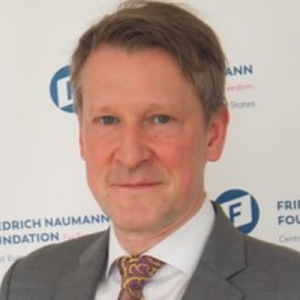
    Dr. Lars-André Richter is the head of the Central Europe office of the Friedrich Naumann Foundation for Freedom (FNF), based in Prague. From 2012 to 2018 he ran FNF’s office in Seoul, South Korea, and from 2018 to 2023 the Foundation’s representation in Buenos Aires, Argentina. As head of the Seoul office, he was also responsible for FNF’s work in North Korea. After studying humanities in Tübingen, Leipzig, Paris and Berlin, Richter received his doctorate in 2008 from Humboldt University in Berlin. In the same year, he joined the FNF as press officer.