Year: 2025

  • Zsuzsanna Végh

    Zsuzsanna Végh

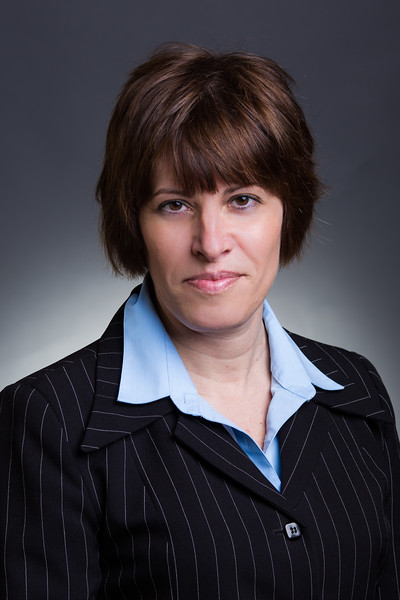
    Zsuzsanna Végh is a program officer at the Transatlantic Trusts of the German Marshall Fund of the United States. Her analytical focus is on Central and Eastern Europe, especially the foreign and EU policies of the Visegrád countries, the state of democracy, and the role and impact of the far right in the European Union. Zsuzsanna has extensive experience working at the intersection of policy analysis and academic research. She has been an associate researcher at the European Council on Foreign Relations since 2011 and authored reports for Freedom House’s flagship project, Nations in Transit, on her native Hungary in 2020-2023. She worked at the European University Viadrina as a researcher and lecturer in 2017–2024, and at the Center for European Neighborhood Studies of Central European University in 2012–2017.

    She holds Master’s degrees in international relations and European studies from Central European University and in international studies from the Eötvös Loránd University in Budapest. She currently pursues a PhD in comparative politics focusing on the far right in Central Europe at the European University Viadrina.

    Her monograph “Depleting Democracies: Radical right impact on parties, policies and polities in Eastern Europe”, co-authored with Michael Minkenberg, was published by the Manchester University Press.
  • Zsuzsanna Szelényi

    Zsuzsanna Szelényi

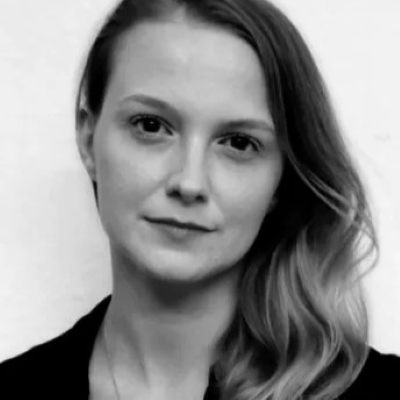
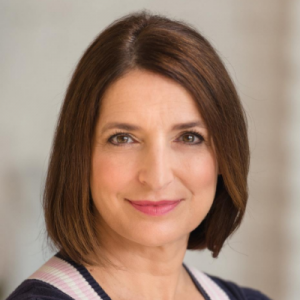
    Zsuzsanna Szelényi is Program Director of the CEU Democracy Institute Leadership Academy, and Senior Fellow at CEPA.

    Before joining the CEU Democracy Institute, Zsuzsanna Szelényi was Richard von Weizsäcker fellow at the Robert Bosch Academy in Berlin conducting research on polarization, populism, and autocratization as threats to democracy in the context of the future of the European Union.

    Between 2014-2018 Ms Szelényi has been a liberal Member of Parliament in Hungary, covering foreign policy, migration, and constitutional affairs.

    Before rejoining politics in 2012 in Hungary, Ms Szelényi served at the Council of Europe advising governments and NGOs on conflict management, human rights education, and human development issues. Between 2010-2013 she worked as a human development consultant for international organizations in various Central European and North African countries.

    Ms. Szelenyi started her career as a member of Fidesz, a youth party at the regime change in Hungary in 1988. As a Member of Parliament, she was dealing with international and migration affairs. She left politics in 1994 for a professional career. In 2012 she returned to Hungarian politics.

  • Maciej Kisilowski

    Maciej Kisilowski

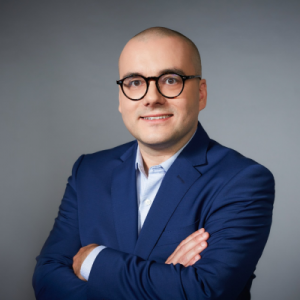
    Maciej Kisilowski is Associate Professor of Law and Strategy at Central European University and the 2025/26 Europe’s Future Fellow at IWM in Vienna. His research spans public law, management, and political economy, with a particular focus on democratic resilience and innovative institutional design. In 2018, he co-founded the Social Contract Incubator (IUS), a cross-partisan network of 130 intellectuals that developed a comprehensive blueprint for constitutional reform in Poland. The results were published in 2023 in Let’s Agree on Poland, an edited volume that became a non-fiction bestseller and was hailed in Polityka—Poland’s leading opinion weekly—as “the most important book about Polish politics since 1989.” An English edition followed in 2025 with Oxford University Press. His earlier book on public sector strategy was translated into five languages, including a Hungarian edition published by HVG. Educated in law, policy, and management at Yale, Princeton, INSEAD, the Wharton School, and Warsaw University, Kisilowski is a frequent voice in Poland’s leading media and contributes internationally, with commentary in Foreign Policy, Politico, Financial Times, Project Syndicate, and Der Standard.

  • Ágnes Urbán

    Ágnes Urbán

    Ágnes Urbán is co-founder and director of Mertek Media Monitor media watchdog organization. She has been a member of the jury of the Soma Award, the most prestigious journalism prize in Hungary since 2015. She was involved in different European research programs in recent years and she is the Executive Board member of the LAKMUSZ-HDMO (Hungarian Digital Media Observatory). Her academic career is linked to the Corvinus University of Budapest, she is Associate professor and chair of the Department of Infocommunication. Her main research interests are transformation of the media market in Hungary, the analysis of the market distortion effects of state advertising spending, the analysis of market issues in media policy, and changes in media consumption habits. Urbán is the author of 100+ Hungarian and English-language international publications in the fields of media and infocommunication.

  • Maryia Sadouskaya-Komlach

    Maryia Sadouskaya-Komlach is a media development specialist, editor, and journalist with more than 15 years of professional experience. She has lived and worked in Belarus, U.S., Czechia, Poland, Belgium, the Netherlands, and France and managed projects involving 20+ countries in Eastern and Central Europe, Central Asia, and Central America.

    Maryia’s research interests are democracy transition, human rights, media development in “closed” environments, including exiled media, disinformation, and the development of new communication and media strategies and responses. Being a Belarus native, she has covered the EU-Belarus relations and Belarusian foreign policy since 2001.

    In 2015, Maryia advised the European Endowment for Democracy on its Feasibility Study on Russian-language Media Initiatives. In 2019, she co-wrote a comprehensive analysis of Syrian exiled media for the International Media Support (Denmark). Maryia is currently the Global Engagement Strategist at the Dutch non-for-profit media support organization Free Press Unlimited and contributes as a freelancer to several European media outlets. She looks for synergies between like-minded professionals and organizations all over the globe and specializes in creating and managing networks.

    Maryia holds a Master’s degree in Journalism/Politics from Columbia University and is a Fellow at Center for European Policy Analysis (CEPA).

  • Ming-chin Monique Chu

    Dr. Ming-chin Monique Chu, a Lecturer in Chinese politics at the University of Southampton, holds M.Phil. and PhD degrees in International Relations from the University of Cambridge.

    Her research focuses on the geopolitics and the geoeconomics of semiconductors, problematic sovereignty, and cross-Strait relations. Previously affiliated with SOAS and the University of Oxford, she is acclaimed for her groundbreaking monograph, The East Asian Computer Chip War (Routledge, 2013), and for co-editing Globalization and Security Relations across the Taiwan Strait (with Scott L. Kastner, Routledge, 2014). Her work has appeared in esteemed journals such as The Journal of Strategic Studies, and the China Quarterly. She is currently completing her second monograph, Achilles’ Heel of the Dragon: Problematic Sovereignty along China’s Periphery.

    In March 2018, Dr. Chu was invited to give oral evidence on China’s capabilities in the field of emerging technologies in front of the House of Lords International Relations Committee. She is a sought-after commentator for major international media outlets, including the BBC, National Public Radio, and the Australian Broadcasting Corporation, providing expert insights on semiconductors, Chinese foreign policy, cross-Strait relations, and Sino-U.S. relations.

  • Nóra Schultz

    Nóra Schultz is a political theorist and podcaster working in Budapest, Hungary. She holds a BA in Human, Social and Political Science from the University of Cambridge and an MSc in Political Theory from the London School of Economics, where she wrote her thesis on the role of realism in early 20th century revolutionary political thought. She previously worked as an editor at Partizán Media and as a political consultant in the Hungarian National Assembly. Her newsletter can be found at schultznora.hu.

  • Pawel Zerka

    As the European Council on Foreign Relations’ lead analyst on public opinion, Pawel Zerka spearheads the organization’s polling and data research on foreign affairs. His other areas of study include global trade policy, Latin American politics, as well as Poland’s and France’s role in the European Union. Based in the Paris office, Zerka has been part of the ECFR team since 2017, having worked previously as a foreign policy expert in Poland. He holds a PhD in economics and an MA in international relations from the Warsaw School of Economics.

  • Peter Kraus

    Peter Kraus serves as a City Councilor of Vienna and Co-Leader of the Green Party. He studied Economics and Socioeconomics in Vienna and Sustainable Development at the University of Sussex. His political work focuses on urban planning, mobility, climate and energy policy, with projects ranging from affordable public transport to sustainable urban development. With his academic and political background, he is dedicated to building cities that are greener, more inclusive and just.

  • Péter Krekó

    Péter Krekó

    Political scientist, social psychologist, disinformation expert. He is a senior fellow at the Washington-based CEPA think tank and a PopBack Fellow at the University of Cambridge. Earlier, he was a guest researcher at the Europe’s Futures – Ideas for Action program of the Vienna-based Institute for Human Sciences (IWM), and a non-resident Associate Fellow at the Johns Hopkins University SAIS Bologna Institute of Policy Research. Peter is an associate professor with habilitation at the Department of Social Psychology at ELTE PPK. During 2016-2017, Péter worked as a Fulbright Visiting Professor in the United States at the Central Eurasian Studies Department of Indiana University. He wrote his PhD dissertation on the social psychology of conspiracy theories in 2014, and he habilitated in 2020. He has been the executive director of Political Capital since 2011.

    His main areas of expertise are disinformation, Russian political influence in the West, and European populism and radicalism. He was the co-chair of the EU Radicalization Prevention Network PREVENT until 2015. He is the owner of Political Capital. He has written two books: Tömegparanoia, which has been published in two editions, introduces the social psychological foundations of fake news and conspiracy theories in a scientific and informative manner, and The Hungarian Far Right – which he wrote together with Attila Juhász – on the politics of the Hungarian far right after the democratic transition. The latter is published by Ibiden Verlag and distributed by the Columbia University Press.