Year: 2022

  • Péter Balázs

    Péter Balázs

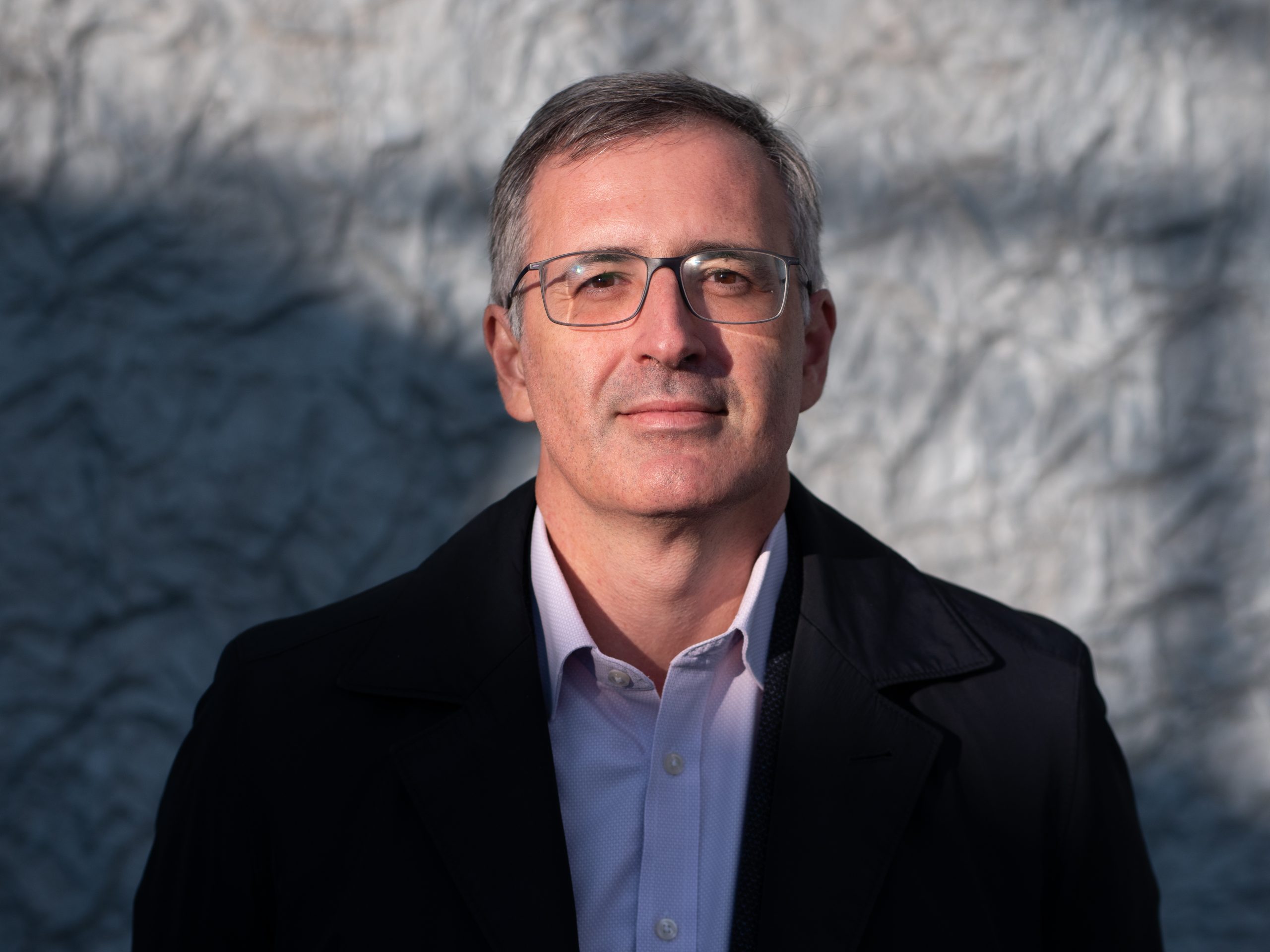
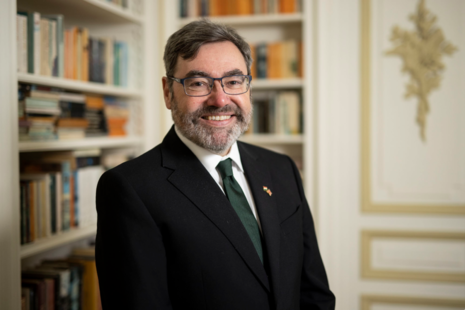
    Graduated in Budapest at the Faculty of Economics (today Corvinus University), he got his PhD degree and habilitated at the same University. He is a ScD of the Hungarian Academy of Sciences. In parallel with his government and diplomatic career he has been teaching and doing research. He was nominated Professor of the Corvinus University in 2000 and joined the CEU as a full time Professor in 2005. He is regularly lecturing at international conferences and universities in English, French, German and Hungarian languages.

    After 1990 Prof. Balázs joined the Government and the diplomatic service of Hungary several times. He was a State Secretary for Industry and Trade (1992-1993) and a State Secretary for European Integration (2002-2003). He was nominated Ambassador of Hungary to Denmark (1994-1996), Germany (1997-2000) and to the EU in Brussels (2003-2004). In 2009-2010 he was Foreign Minister of Hungary.

    He also acquired experience in various EU positions. He was the Government Representative of Hungary in the European Convention drafting the Constitutional Treaty which has become, after several modifications, the Lisbon Treaty. In 2004 he was nominated the first Hungarian Member of the European Commission responsible for regional policy. On the invitation of the European Commission he coordinates priority projects of the Trans-European Transport Network

    Prof. Balázs is holding an Ad Personam Jean Monnet Chair. His research activities are centered on the foreign policy of the EU and problems of the late modernization and European integration of the Eastern part of the continent. He also analyzes questions of European and global governance including the future of European institutions. At the CEU he is teaching two courses: EU Enlargement and Neighborhood Policy (fall semester) and European Governance (winter semester). He established (in 2005) and directs the CEU Center for EU Enlargement Studies (CENS). Prof. Balázs published several books, chapters in books and articles.

    Professor Balázs received on February 21, 2016 the Dr. Jean Mayer Global Citizenship Award by Tufts University and the Institute for Global Leadership “in recognition of his integrity and valor as Foreign Minister, encouraging respect for humanities values and rule of law and fighting discrimination.”
  • Péter Csunderlik

    Péter Csunderlik

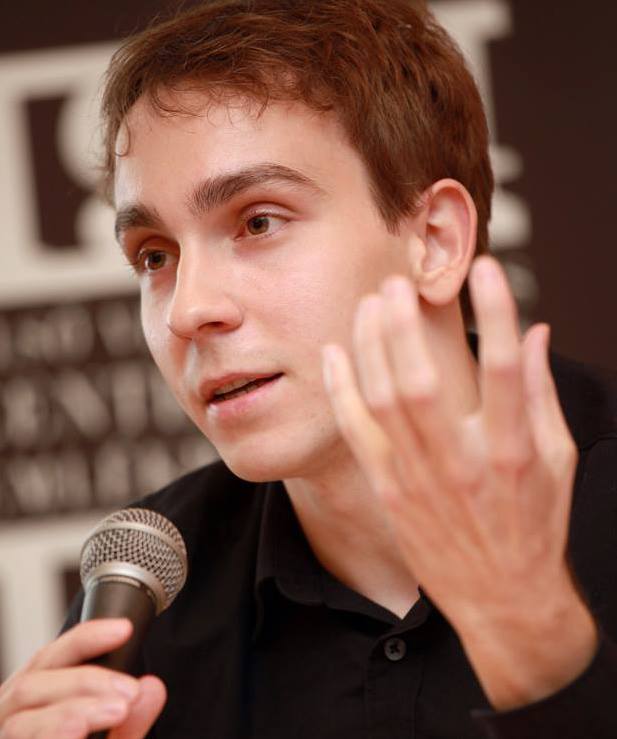
    Péter Csunderlik, Phd is a Hungarian historian, assistant professor at Eötvös Loránd University, research fellow at Institute of Political History (Budapest), and former Junior Joint Budapest Fellow at IAS CEU (January–June 2024). Csunderlik wrote his doctoral dissertation on the history of the atheist, left-wing radical student group “Galilei Kör” (Galileo Circle) (1908–1919), and he received his PhD degree in 2016 at ELTE, where he have been teaching since 2017. He is particularly interested in the history of left- and right-wing radical movements at the turn of 20th Century, in the history and remembrance of the Hungarian Soviet Republic of 1919, and in the history of the USA in the 20th Century. In 2023 he was SUSI scholar at University of Delaware with the grant of the US State Department. He published academic monographs on the history and memory of the Galileo Circle and the Hungarian Soviet Republic.

  • Péter Krekó

    Péter Krekó

    Political scientist, social psychologist, disinformation expert. He is a senior fellow at the Washington-based CEPA think tank and a PopBack Fellow at the University of Cambridge. Earlier, he was a guest researcher at the Europe’s Futures – Ideas for Action program of the Vienna-based Institute for Human Sciences (IWM), and a non-resident Associate Fellow at the Johns Hopkins University SAIS Bologna Institute of Policy Research. Peter is an associate professor with habilitation at the Department of Social Psychology at ELTE PPK. During 2016-2017, Péter worked as a Fulbright Visiting Professor in the United States at the Central Eurasian Studies Department of Indiana University. He wrote his PhD dissertation on the social psychology of conspiracy theories in 2014, and he habilitated in 2020. He has been the executive director of Political Capital since 2011.

    His main areas of expertise are disinformation, Russian political influence in the West, and European populism and radicalism. He was the co-chair of the EU Radicalization Prevention Network PREVENT until 2015. He is the owner of Political Capital. He has written two books: Tömegparanoia, which has been published in two editions, introduces the social psychological foundations of fake news and conspiracy theories in a scientific and informative manner, and The Hungarian Far Right – which he wrote together with Attila Juhász – on the politics of the Hungarian far right after the democratic transition. The latter is published by Ibiden Verlag and distributed by the Columbia University Press.

  • Senada Šelo Šabić

    Senada Šelo Šabić

    Dr. Senada Šelo Šabić is a Senior Scientific Associate at the Institute for Development and International Relations in Zagreb. Senada has over 15 years of professional experience in the fields of European affairs, Western Balkans, migration, and rule of law. In addition to her academic career, Senada has worked as a consultant for international development organizations such as USAID, Sida and Norad, as well as UNDP and IOM. Topics included political and economic assessments, corruption, state capture and extremism, mapping of the international donor assistance, among else. She has worked as a project leader on EU-funded projects such as engagement with citizens on EU topics, migration, asylum and integration of migrants, youth volunteering, and social resilience.

    Senada holds PhD in political and social sciences from the European University Institute in Florence and has two Masters degrees – in international relations from the University of Zagreb and in peace studies from the University of Notre Dame, USA.

    Senada is currently a representative of Croatia in the Standing Working Group on Gender in Research and Innovation in the European Research and Innovation Committee. She is also a chair of the Development Cooperation Projects Approval Committee of the City of Zagreb.

  • Sergei Guriev

    Sergei Guriev

    Sergei Guriev joined Sciences Po as a tenured professor of economics in 2013 after serving as the Rector of the New Economic School in Moscow in 2004-13. In 2016-19, he was on leave from Sciences Po serving as the Chief Economist and the Member of the Executive Committee of the European Bank for Reconstruction and Development (EBRD). In 2022, Sergei Guriev was appointed Sciences Po’s provost.

    Professor Guriev’s research interests include political economics, development economics, labor mobility, and contract theory.

    He is also a member of the Executive Committee of the International Economic Association and a Global Member of the Trilateral Commission. He is also a Research Fellow and the Leader of the Research and Policy Network on Populism at the Centre for Economic Policy Research, London. He is a Senior Member of the Institut Universitaire de France and an Ordinary Member of Academia Europeae.

  • Shalini Randeria (online)

    Shalini Randeria (online)

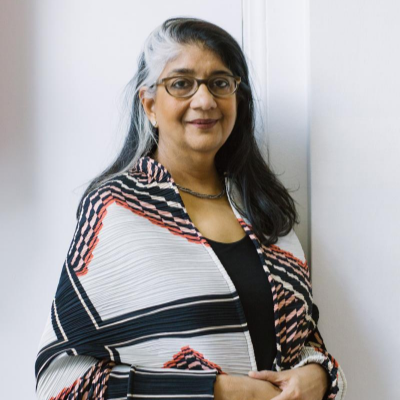
    Shalini Randeria is President and Rector of CEU.

    American-born Indian social anthropologist/sociologist Shalini Randeria has had a distinguished academic career at institutions of higher education across Europe. She was Rector of the Institute for Human Sciences (IWM) in Vienna and Professor of Social Anthropology and Sociology at the Graduate Institute of International and Development Studies (IHEID) in Geneva, where she was also Director of the Albert Hirschman Centre on Democracy. She holds the Excellence Chair at the University of Bremen, where she leads a research group on “soft authoritarianisms”.

    Currently she is Deputy Chair of the Class of Social and Related Sciences, Academia Europaea; Distinguished Fellow of the Munk School of Global Affairs, University of Toronto, Canada and Distinguished Visiting Fellow of IIASA, Laxenburg, Austria; serves on the Board of European Forum Alpbach and is Member of the International Advisory Panel on Population and Development, UNFPA EECA group. She has served more recently on the CEU’s Board of Trustees.

    Shalini Randeria has published widely on the anthropology of globalization, law, the state and social movements. Trained as a sociologist and social anthropologist in Western and non-Western social science traditions, she was exposed to a diversity of disciplinary orientations and theoretical perspectives.

    In June 2021, The Board of Trustees of Central European University elected Shalini Randeria as CEU’s 6th President and Rector. Professor Randeria is the first woman, and the first person from the global South, to take up this position since the founding of the university 30 years ago.

  • Sofia Oliynyk

    Sofia Oliynyk

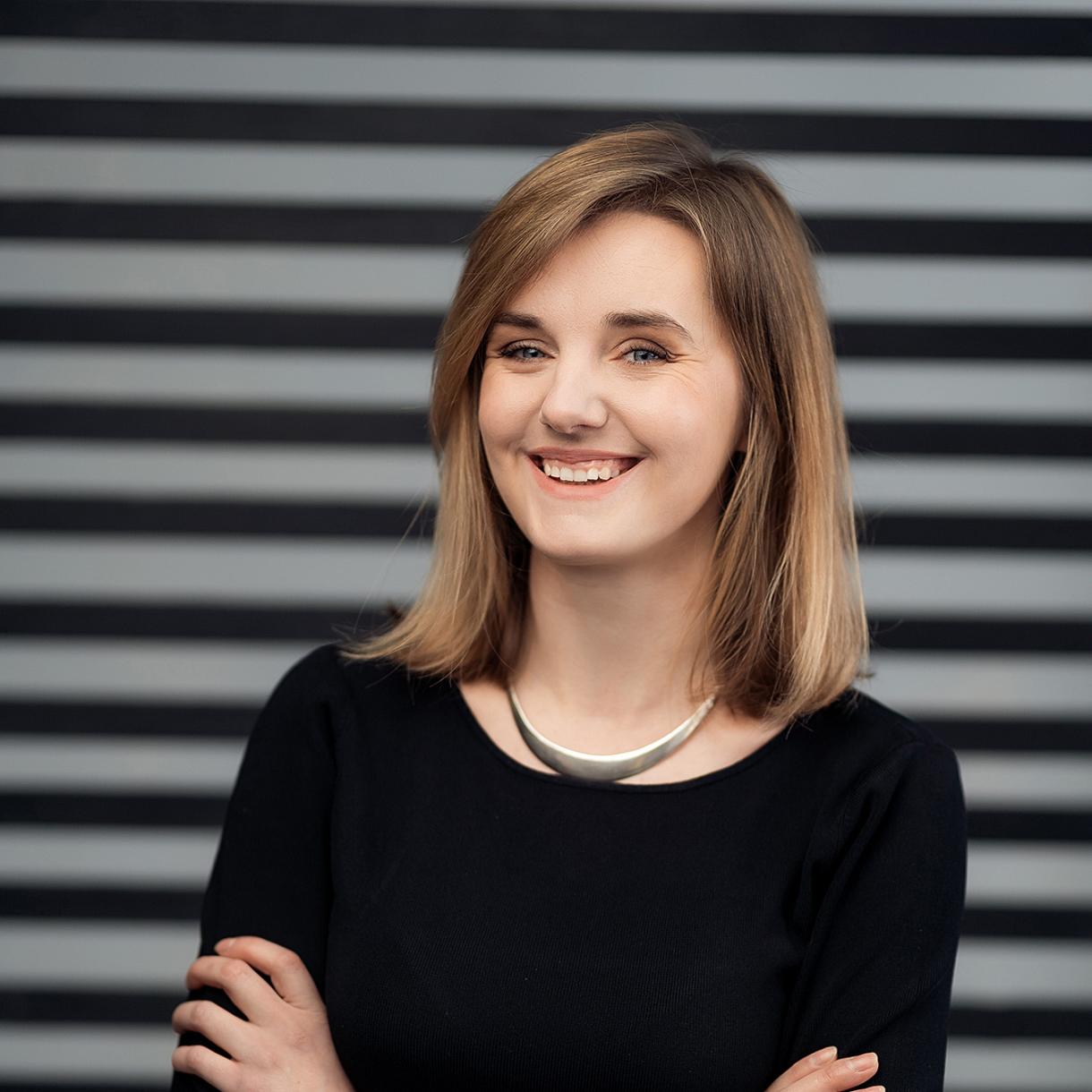
    Sofia Oliynyk is coordinator of the Program “Democracy Support and Human Security” at the Heinrich Boell Foundation Ukraine. She is dealing with support of the grassroots initiatives in the field of urban and sustainable mobility development; promotion of critical historical discourse and promotion of the concept of “human security” in public discourse. With the start of the Russian full-scale invasion of Ukraine, together with experts and activists she found the project Share The Truths, which focuses on regular updates related to the impact of the war, as well as contributes to fighting Russian disinformation.

    Her prior professional experience includes support of different aspects of democracy with the assistance of international organisations. Before joining the Foundation, Sofia worked in Deutsche Gesellschaft für Internationale Zusammenarbeit (GIZ) GmbH, namely U-LEAD with Europe Programme. Prior she did a traineeship at the European Commission DG DEVCO, worked with the National Development Institute supporting Parliament of Ukraine and OSCE/ODIHR election observation missions.