Year: 2022

  • András Rácz (online)

    András Rácz (online)

    Dr. András Rácz is a senior research fellow at DGAP’s Center for Order and Governance in Eastern Europe, Russia, and Central Asia. Before that, he worked in its Security and Defense Program. From September 2019 to December 2020, he was a senior fellow of the Robert Bosch Center for Central and Eastern Europe, Russia, and Central Asia.

    Previously, Rácz was associate professor at the Pázmány Péter Catholic University in Budapest and non-resident research fellow of the Estonian Foreign Policy Institute in Tallinn. Between 2014 and 2016, he was senior research fellow of the Finnish Institute of International Affairs in Helsinki. Prior to that, Rácz worked as a senior research fellow at the former Hungarian Institute of International Affairs and a visiting researcher at the Transatlantic Academy of the German Marshall Fund in Washington, DC. He was also a fellow of the Volkswagen Foundation’s program in European Foreign and Security Policy Studies (EFSPS).

    Rácz earned his PhD in modern history from Budapest’s Eötvös Loránd University in 2008.
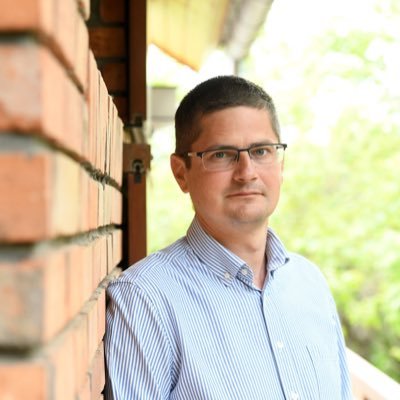
  • Hanna Abdullah

    Hanna Abdullah

    Hannah Abdullah is a senior program officer and fellow in the Cities program of the German Marshall Fund of the United States (GMF). She leads GMF Cities’ work on climate justice and sustainability, which supports transatlantic cooperation for achieving an inclusive green transition that starts locally. Hannah regularly speaks and publishes on the role of cities in global and European climate governance, as well as in the transition toward sustainable development. Previously, she was a senior research fellow for the Global Cities Program of the Barcelona Centre for International Affairs (CIDOB), where she led the organization’s research and other activities on urban climate action in close collaboration with the Barcelona City Council. She also has extensive experience in the areas of cultural diplomacy and transatlantic relations. From 2015 to 2017, she was a program officer with the New-York office of the Goethe-Institut, Germany’s cultural institute, where she developed and managed programs on urbanization and architecture, among others. Hannah holds a PhD in sociology from the London School of Economics (LSE).

  • Jan Philipp Albrecht

    Jan Philipp Albrecht

    Jan Philipp Albrecht is the President at Heinrich-Böll-Stiftung.

    Since June 2022, Jan Philipp Albrecht serves as Co-President of the Berlin-based Heinrich Böll Foundation. Before, he was Minister for Energy Transition, Agriculture, Environment, Nature and Digitalisation of the State of Schleswig-Holstein in the Günther cabinet, since 1 September 2018.

    As a Member of the European Parliament, Jan Philipp Albrecht represented the citizens of Hamburg and Schleswig-Holstein from 2009 to 2018. Jan Philipp Albrecht’s topics were home affairs and justice policy, including the reform of European data protection law, the right to legal assistance, the European Investigation Order, police policy and the fight against right-wing extremism. Particularly close to his heart are “civil rights in the digital age”.

    As MEP, Jan Philipp Albrecht was a Member and Vice-Chairman of the Committee on Home Affairs and Justice and a Substitute Member of the Committee on the Internal Market and Consumer Protection. During his first legislative term from 2009-2014, he was a member of the Committee on Home Affairs and a substitute member of the Committee on Legal Affairs. From December 2012 to October 2013, Jan Philipp Albrecht was also coordinator for the Special Committee against Organised Crime, Corruption and Money Laundering. As the European Parliament’s negotiator for the planned Data Protection Regulation, he negotiated with the European Council Presidency and the European Commission on a uniform data protection law for the EU. In addition, Jan Philipp Albrecht was a member of the delegations for relations with Israel as well as Australia and New Zealand.

    From 2003 to 2008, Jan studied law in Bremen, Brussels and Berlin, specialising in European and international law. Supported by a scholarship from the Heinrich Böll Foundation, he completed his studies with the first state law examination. Until his election to the 7th European Parliament in 2009, Jan specialised in IT law at the Universities of Hanover and Oslo within the framework of a DAAD-funded postgraduate master (LL.M.).

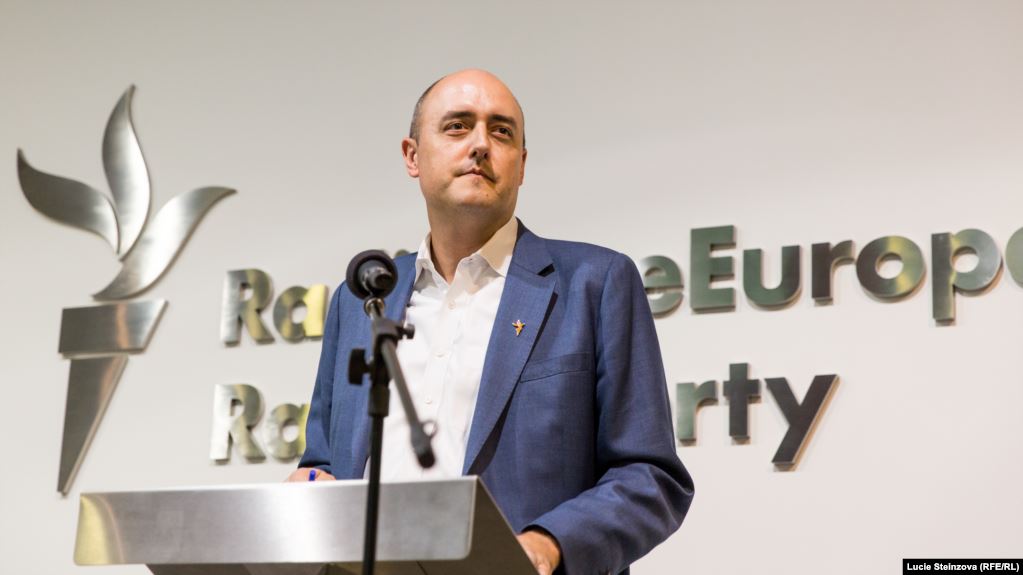
  • Jamie Fly

    Jamie Fly

    Jamie Fly resumed his leadership of RFE/RL as President and Chief Executive Officer on February 16, 2021, following his reappointment by the RFE/RL Board of Directors. Fly was first named RFE/RL President and Chief Executive Officer on July 10, 2019, effective August 1, 2019. Prior to his appointment, Fly served as a senior fellow, co-director of the Alliance for Security Democracy, and director of the Future of Geopolitics and Asia programs at The German Marshall Fund of the United States. He served as counselor for Foreign and National Security Affairs to Senator Marco Rubio (R-FL) from 2013-17, serving as his foreign policy advisor during his presidential campaign. Prior to joining Senator Rubio’s staff in February 2013, he served as the executive director of the Foreign Policy Initiative (FPI) from its founding in early 2009. Prior to joining FPI, Fly served in the Bush administration at the National Security Council (2008-09) and in the Office of the Secretary of Defense (2005-08). His articles and reviews have been published in a wide variety of outlets in the United States and Europe. For his work in the Department of Defense, he was awarded the Office of the Secretary of Defense Medal for Exceptional Public Service. Fly received a B.A. in international studies and political science from American University and an M.A. in German and European studies from Georgetown University.

  • Ivan Krastev

    Ivan Krastev is the chairman of the Centre for Liberal Strategies and Albert Hirschman Permanent Fellow at the Institute for Human Sciences, IWM Vienna. He is a founding board member of the European Council on Foreign Relations, a member of the Board of Trustees of The International Crisis Group and member of the Board of Directors of GLOBSEC. He is a Financial Times contributing editor and the author of “Is it Tomorrow, Yet? How the Pandemic Changes Europe” (Allen Lane/Penguin, 2020); The Light that Failed: A Reckoning (Allen Lane/Penguin, 2019), co-authored with Stephen Holmes – won the 30th Annual Lionel Gelber Prize; “After Europe” (UPenn Press, 2017); “Democracy Disrupted. The Global Politics on Protest” (UPenn Press, 2014) and “In Mistrust We Trust: Can Democracy Survive When We Don’t Trust Our Leaders?” (TED Books, 2013).

  • Helena Ivanov

    Helena Ivanov

    Dr. Helena Ivanov is an Associate Research Fellow at the Henry Jackson Society. She recently completed a PhD in International Relations at the London School of Economics and Political Science. Her research focuses on the relationship between propaganda and violence against civilians. In her thesis, Helena examined the role propaganda played during the Yugoslav Wars and produced a model for studying propaganda which details the key phases, functions, discourses, and techniques of propaganda (the model itself is applicable to other contexts). Additionally, Helena also served as a Manager at the Centre for International Studies at the LSE.

    Prior to her PhD, Helena completed an MPhil in Political Theory at the University of Oxford, and holds a BA in Politics from the University of Belgrade.