Year: 2023

  • Tanja Dramac Jiries

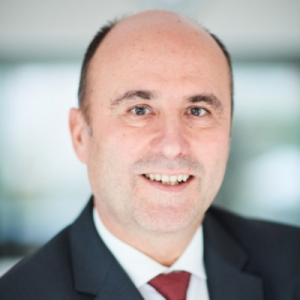
    Tanja Dramac Jiries is the Deputy Director for Europe at National Endowment for Democracy.

    Tanja Dramac Jiries is deputy director for Europe at the National Endowment for Democracy (NED), where she oversees over $35 million in democracy assistance to more than 350 civil society organizations, think tanks, and independent media across Europe. Her areas of interest include post-conflict transition, extremism and radicalization, youth civic engagement and independent media.

    She is also a political scientist and analyst of European and international affairs with a PhD cum laude from Scuola Superiore Sant’ Anna. In her academic career, Tanja has researched the process of radicalization and violent extremism occurring in parallel to democratization processes, state building, and post-conflict transition utilizing extensive fieldwork spanning several years including interviews with foreign fighters and their families and other primary sources for her doctoral thesis.

    Her book “Balkan fighters in the Syrian War” is published by Routledge in 2021.

  • Tamás Boros

    Tamás Boros is the Executive Director and Co-Founder of the Equilibrium Institute of Budapest.

    He is a political analyst, Member of the Scientific Council of the Brussels-based Foundation for European Progressive Studies (FEPS), a leading European think tank. Co-author of the book Hungary 2030 – A Vision for Hungarians.

    From 2002, he was Director of the Pillar Foundation, where he was involved in education and public information on EU issues in order to improve the preparedness of society for Hungary’s accession to the EU. Under his leadership, the Pillar Foundation became one of the largest NGOs dealing with EU issues in Hungary. He was awarded the German Schwarzkopf Foundation’s “Young European of the Year” for his work in 2005.

    From 2007, Tamas Boros worked briefly as an expert on EU communication issues, first in the European Parliament, then in the Ministry of Foreign Affairs of the Republic of Hungary, and finally in the European Commission. At the European Commission, his tasks included developing a communication plan for the Lisbon Treaty and the enlargement of the European Union, as well as analyzing public opinion polls in the EU Member States and integrating them into EU decision-making.

    In 2008, he co-founded Policy Solutions, a political research institute, where he served as Director of Strategy for 11 years. During this time, he was the author of dozens of studies in Hungarian and English, including on the development of Hungarian and European democracy, Euroscepticism, and populism. As a Director of Strategy at Policy Solutions, he has given hundreds of interviews to the BBC, The Economist, CNBC, The Financial Times, Le Monde, Die Zeit, Al Jazeera, The New York Times, Newsweek, and Politico, among others. For almost a decade, he was a regular guest on the political TV shows of HírTV and ATV. He has lectured to students at the London School of Economics (LSE) in the UK, to Members of the European Parliament in Brussels, and in dozens of other countries worldwide, from Germany to the United States.

    In 2018, Tamás Boros co-founded the Equilibrium Institute. Since its founding, he has served as the Executive Director of the think tank, where, in addition to managing the think tank’s work, he has been involved in the development of dozens of policy proposal packages and frequently writes for leading Hungarian media.

    He is a member of Mensa HungarIQa. He and his wife regularly organize cultural and public salons. His hobbies include film history and travel. So far he has traveled to more than 100 countries around the world, from Eritrea to Vanuatu.
  • Petr Luňák

    Petr Luňák

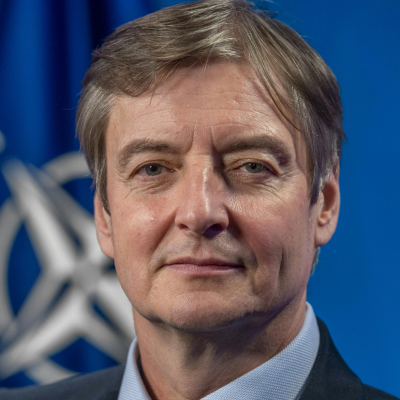
    Petr Luňák is a Deputy Head of the Engagement Section at NATO Public Diplomacy Division.

    He is responsible for overseeing public diplomacy endeavours of the Alliance. He is a member of the Czech Foreign Service and he was a Deputy Head of the Planning Staff of the Foreign Ministry before joining the NATO International Secretariat in 2000. Mr. Luňák holds a Ph.D. from Charles University in Prague where he taught international relations and modern history.

  • Shalini Randeria (online)

    Shalini Randeria (online)

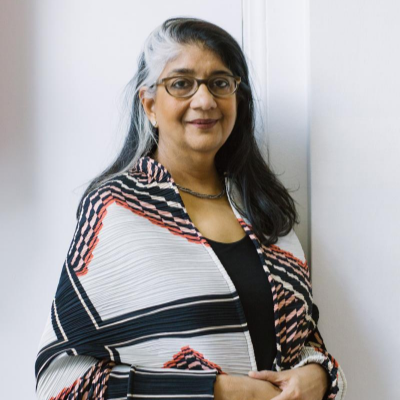
    Shalini Randeria is President and Rector of CEU.

    American-born Indian social anthropologist/sociologist Shalini Randeria has had a distinguished academic career at institutions of higher education across Europe. She was Rector of the Institute for Human Sciences (IWM) in Vienna and Professor of Social Anthropology and Sociology at the Graduate Institute of International and Development Studies (IHEID) in Geneva, where she was also Director of the Albert Hirschman Centre on Democracy. She holds the Excellence Chair at the University of Bremen, where she leads a research group on “soft authoritarianisms”.

    Currently she is Deputy Chair of the Class of Social and Related Sciences, Academia Europaea; Distinguished Fellow of the Munk School of Global Affairs, University of Toronto, Canada and Distinguished Visiting Fellow of IIASA, Laxenburg, Austria; serves on the Board of European Forum Alpbach and is Member of the International Advisory Panel on Population and Development, UNFPA EECA group. She has served more recently on the CEU’s Board of Trustees.

    Shalini Randeria has published widely on the anthropology of globalization, law, the state and social movements. Trained as a sociologist and social anthropologist in Western and non-Western social science traditions, she was exposed to a diversity of disciplinary orientations and theoretical perspectives.

    In June 2021, The Board of Trustees of Central European University elected Shalini Randeria as CEU’s 6th President and Rector. Professor Randeria is the first woman, and the first person from the global South, to take up this position since the founding of the university 30 years ago.

  • Rosa Martinez Rodriguez

    Rosa Martinez currently works for a philanthropic foundation active in climate policies, and has for many years been actively involved in politics herself. She is member of Ecopolitica, Spanish think tank on political ecology, and was a member of the Spanish Parliament, where she was part of the Ecological Transition, Industry, Economy and Science committees. She was also a co-spokesperson of the Spanish Green party and coordinated the green-left coalition group in the Basque Parliament.

    Rosa grew up in a coal mining area, studied in Madrid and lived in Grenoble (France) for four years. She has a background in Political Science and experience managing European Projects, as well as being an Education Manager for the Aranzadi Society of Sciences, an NGO working on natural and cultural heritage.

  • Roland Freudenstein

    Roland Freudenstein

    Roland Freudenstein was the Vice President and Head of GLOBSEC Brussels between 2021 and 2023. Previously and since 2008, he was Policy Director of the Wilfried Martens Centre for European Studies, the think tank of the European People’s Party in Brussels. Previously active in the think tank world (German Council on Foreign Relations), global democracy support (Konrad Adenauer Foundation) and public service (European Commission and Hamburg State Government). Specialist on European integration and international security, staunch advocate of the West and critic of the Kremlin’s aggression.

  • Réka Szemerkényi (online)

    Réka Szemerkényi is a Senior Advisor on Transatlantic Strategy at the International Republican Institute.

    Dr. Szemerkényi is a recognized expert on transatlantic strategy, European security, energy security, high level speaker at international conferences at the Penn-Biden Center, the McCain Institute, the Jamestown Foundation, at the Hybrid Defense Academy for Senior Executives, at SAIS, the Johns Hopkins University, Guest Lecturer at the Elliott School of International Affairs, George Washington University, at the Catholic University Pázmány, at the Karoli Protestant University in Hungary and at the University of Milan, Italy.

    Prior to joining IRI, she was Executive Vice President of CEPA, the Center for European Policy Analysis (2017-20). She was Ambassador of Hungary to the United States (2015-7), State Secretary, Foreign and Security Policy Advisor to the Prime Minister (2011-5, 1998-2002) and Senior Advisor in the Ministry of Defense (1990-4). Her business experience includes being Senior Advisor to the Chairman and CEO of MOL Group, the Oil and Gas Company (2006-11) and Consultant of the World Bank (1994).

  • Réka Sáfrány

    Réka Sáfrány is the Chairwoman at Hungarian Women’s Lobby.

    Réka Sáfrány is the former President of the European Women’s Lobby and now she is the chair of the Hungarian Women’s Lobby (HWL), EWL’s National Coordination in Hungary. In her 15 years of experience as a gender equality expert, Réka has worked at MONA Foundation for the Women of Hungary and at the Hungarian Women’s Lobby.

    In 2007 and 2013, she was involved in writing an alternative NGO report for the UN Committee on the Elimination of Discrimination against Women (CEDAW). In her work, she has conducted policy research on women’s political participation, gender and media, and violence against women. At the HWL, she has contributed to gender- sensitive research projects, policy analyses on the status of gender equality in Hungary and capacity building activities. She also participated in HWL’s alternative reports to the CEDAW Committee on the issue of women in political decision-making, and co-authored HWL’s policy recommendations on Hungarian women’s political representation, the state gender equality institutional machinery and women’s representation in the media.

  • Pietro Reviglio

    Pietro Reviglio is a policy officer at Eurocities.

    Pietro coordinates work related to EU regional and urban development, governance, urban planning, and participatory democracy among others.

  • Piergiuseppe Fortunato

    Piergiuseppe Fortunato is an Economist at United Nations Conference On Trade And Development.

    Before joining UNCTAD he was an Economist at Department of Economic and Social Affairs of the United Nations. In the past he held a position of Assistant Professor in Economics at the University of Bologna and did research at the the Université Paris I Panthéon Sorbonne as a Research Fellow. His research interests include long-term growth and political economy, economic development and south-south integration.