Year: 2023

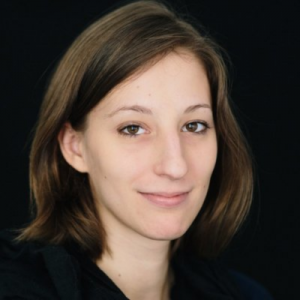
  • Petra Guasti

    Petra Guasti

    Dr. Petra Guasti is a Postdoctoral Research Fellow at the Research Unit ‘Democratic Innovations’ working on a DFG-ANR project: (New) Political Representative Claims: A Global View (France, Germany, Brazil, India, and China).

    She previously held research and teaching positions at the University of Bremen (2005-2008), University of Wurzburg (2008-2011), University of Mainz (2011-2016), the Institute of Sociology, Czech Academy of Sciences (2011-2016) and a visiting position at the Queen’s University Belfast School of Law (2016).

    Dr. Guasti holds an M.A. in Society and Politics from Lancaster University (2002), a PhD in political sociology from the Charles University (2007) and PhD in political science from Bremen University (2014). Her research stays include among others University of Essex (UK), EUI (Italy), Soochow University (Taiwan), Arizona State University (USA) and most recently Queens University of Belfast School of Law (UK). She is a Co-convener of the Standing Group Central and Eastern European Politics of the European Consortium for Political Research.

    Her main research focus is democracy, more specifically on the growing tension within the system of representative democracy in respect to its legitimacy. Her main interests are the study of structures, actors and processes that enable more participation of citizens, leading to more inclusiveness of representative democracy. She has an ongoing interest in civil society and human rights.
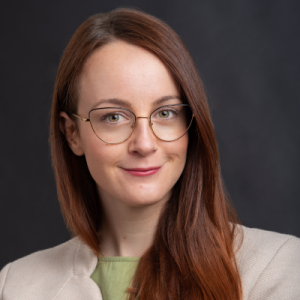
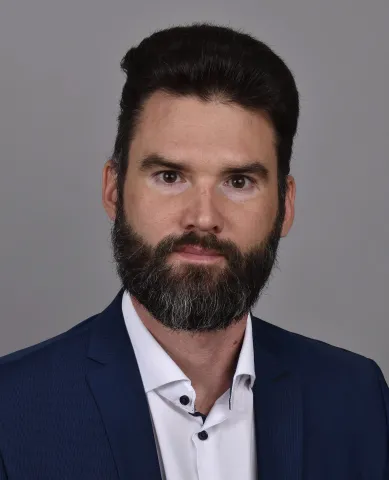
  • Benjamin Denis

    Benjamin Denis is a Senior Policy Advisor at IndustriAll European Trade Union.

    Mr Denis is responsible for industrial policy and the European Green Deal, and visiting professor at Saint-Louis University in Brussels. His work has contributed to mainstream ‘Just Transition’ in EU climate policy and UN climate negotiations.

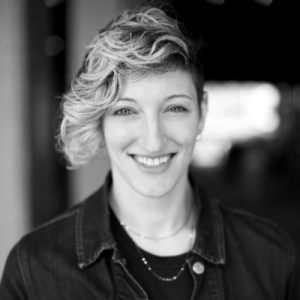
  • Dorka Takácsy

    Dorka Takácsy

    Dorka Takácsy is a researcher focusing on disinformation and propaganda in Central-Eastern Europe and Russia. She is a research fellow at the Centre for Euro-Atlantic Integration and Democracy, and a PhD candidate at the Corvinus University of Budapest, where she researches Russian domestic disinformation about the West. She held a visiting fellowship with the German Marshall Fund of the United States in 2023-25, a Denton Transatlantic Fellowship at the Center for European Policy Analysis in Washington D.C., and a Visegrad-Taiwan Scholarship in 2024, along with a Think Visegrad Fellowship in 2023 from the International Visegrad Fund. She gained professional experience at the European Parliament, the Political Capital Institute in Budapest, the National Defense University in Washington, and elsewhere. Dorka holds an MA in international relations from Central European University and a BA in international business from the Budapest Business School and the University of Picardy Jules Verne.

  • Didier Reynders (online)

    Didier Reynders is the European Commissioner for Justice.

    Didier Reynders member of the Mouvement Réformateur (MR) serving as European Commissioner for Justice since 2019. He held various positions in public institutions before becoming a member of the House in 1992. He was a minister without interruption from 1999 to 2019, until resigning to become Belgian European Commissioner.

    He served as Federal Minister of Finance until December 2011 in six different governments, then Federal Minister for Foreign Affairs, Trade Foreign Affairs and European Affairs in two governments. Following the government crisis of December 2018, he was also appointed to the post of Minister of Defense until November 2019.

  • Dénes Krusovszky

    Mr. Krusovszky began his university studies in 2000 at the Hungarian Faculty of Humanities of Eötvös Loránd University, and from 2003 he was a student of Comparative Literature and from 2004 of Aesthetics.

    He was a founding member of the Telep Group between 2005 and 2009, and was previously editor of the literary journals Puskin Street and Ex Symposion, and of the world literature series of the Attila József Circle. In 2008, he was awarded the Móricz Zsigmond Scholarship and the Junior Prima Prize in Hungarian Literature.

    His third book of poems, entitled ‘A felesleges part’, was published by Magvető in 2011, after which he was awarded the Attila József Prize in 2012, making his one of the youngest authors to receive this prestigious state award in recent decades. In 2013, he published a children’s poetry collection entitled ‘Mindenhol ott vagyok’, and in the same year he was awarded the first ever Horváth Péter Literary Fellowship.

    Since 2014, he has been the founding editor-in-chief of Versum, an online world literature journal on foreign poetry and literary translation. He is a member of the József Attila Circle and the Society of Poets.

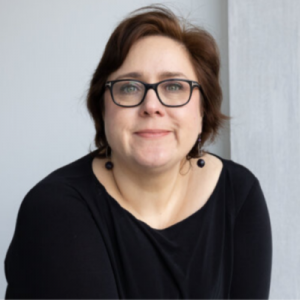
  • Daphne Halikiopoulou

    Daphne Halikiopoulou is the Chair of Comparative Politics at the University of York.

    Daphne joined the department in January 2023 as Chair in Comparative Politics. She was previously Professor of Comparative Politics at the University of Reading. She gained her PhD from LSE (2007) where she also worked as a Fellow in Comparative Politics (2009-2012).

    Daphne is interested in party politics and voting behaviour with a focus on the far right, populism and nationalism in Europe. She is the author of Understanding right-wing populism and what to do about it (with Tim Vlandas), The Golden Dawn’s ‘Nationalist Solution’: explaining the rise of the far right in Greece (with Sofia Vasilopoulou) and numerous articles on European far right parties. Her research appears in the European Journal of Political Research, West European Politics, Journal of Common Market Studies, European Political Science Review, Journal of Ethnic and Migration Studies, Government and Opposition, Environmental Politics and Nations and Nationalism among others. Her article ‘Risks, Costs and Labour Markets: Explaining Cross-National Patterns of Far-Right Party Success in European Parliament Elections’ (with Tim Vlandas) has been awarded Best Paper from the American Political Science Association (APSA).

  • Dániel Hegedűs

    Dániel Hegedűs

    Dániel Hegedüs is Deputy Director of the Institut für Europäische Politik. Previously, he was Regional Director for Central Europe at the German Marshall Fund of the United States (GMFUS). His research focuses on democratic and rule of law backsliding in the European Union, populism, and the European and foreign affairs of the Visegrad countries. He has studied political science, history, and European law at the Eötvös Loránd University Budapest and the Humboldt University in Berlin. Before joining GMFUS in 2019, he has worked in different research, lecturing, and program management positions at the German Council on Foreign Relations (DGAP), the German Institute for International and Security Affairs (SWP), Freedom House, the Institute for Eastern-European Studies at the Free University Berlin, Humboldt University to Berlin, and the Eötvös Loránd University Budapest. He is author of more than 50 academic and policy papers, and a frequent contributor to international media.

  • Boris Kálnoky

    Boris Kálnoky is the Head of the School of Media at Mathias Corvinus Collegium.

    Head of the MCC School of Media. “Kalnoky, you should become a journalist!” – “God forbid!” I had this brief exchange with one of my teachers in eighth grade. Eventually, journalism became my life. I was born in Germany in 1961 to a Szekler father and a Silesian mother. My parents moved to a new country or city every few years, so I spent my childhood in Germany, the United States, the Netherlands and France, in six different cities. I finished school in Paris, studied political science in Hamburg (graduated in 1986), then joined the editorial staff of the German newspaper Die Welt. When the change of regime came in 1989, my Hungarian roots went east, and I started to write about Central and Eastern Europe. In 1993, I left my burgeoning career at Die Welt and came to Budapest to freelance. Nine months later, I was lured back, now as a correspondent. In 2004, I became a correspondent for Turkey and the Middle East, based in Istanbul, from where I returned in 2013. In 2015 I left Die Welt again to freelance again in Hungary. Although I continue to work for them, I now also work in parallel with Austrian and Swiss publications. I can’t live without writing, and I want to share this passion with my students.

  • Blanka Zöldi

    Blanka Zöldi

    Blanka Zöldi is the Editor-in-Chief of Lakmusz.

    She has been working as a journalist for nearly ten years. In 2014, they started their career at Origo, then worked at Abcúg, and later focused on economic journalism in Brussels. From 2017, she was a journalist and later editor at Direkt36, an investigative journalism center. She has been involved in several international investigations and in uncovering the Orbán family’s state business. He is a regular lecturer at universities, teaching investigative journalism courses at ELTE and Metropolitan University. As editor-in-chief, she is responsible for the content of Lakmusz.

  • Beth Goldberg

    Beth Goldberg

    Beth Goldberg is the Head of Research at Jigsaw at Google.

    Jigsaw is a unit within Google that builds technology to tackle global security challenges—from thwarting online censorship, to mitigating digital attacks, to countering violent extremism, to protecting people from hate and harassment online. Ms Goldberg leads an interdisciplinary team of researchers seeking to understand online harms at the human level – including violent extremism, hate, harassment, and disinformation – and then develop mitigation strategies for tech products and policy that are grounded in empirical evidence.

    She worked as a consultant at Article 19, she was a Senior Program Associate at Freedom House, she worked at Amnesyt International, where she was a Crisis Prevention and Response Researcher.

    She studied Global Affairs and Internet Governance at Yale University. She is a Yale Law School Fellow at an Information Society Project. She also has a degree of Foreign Service, Security Studies, African Studies, & Arabic from Georgetown University.